
Whole-House Generator Installation in Wayne, NJ: What to Know Before Storm Season
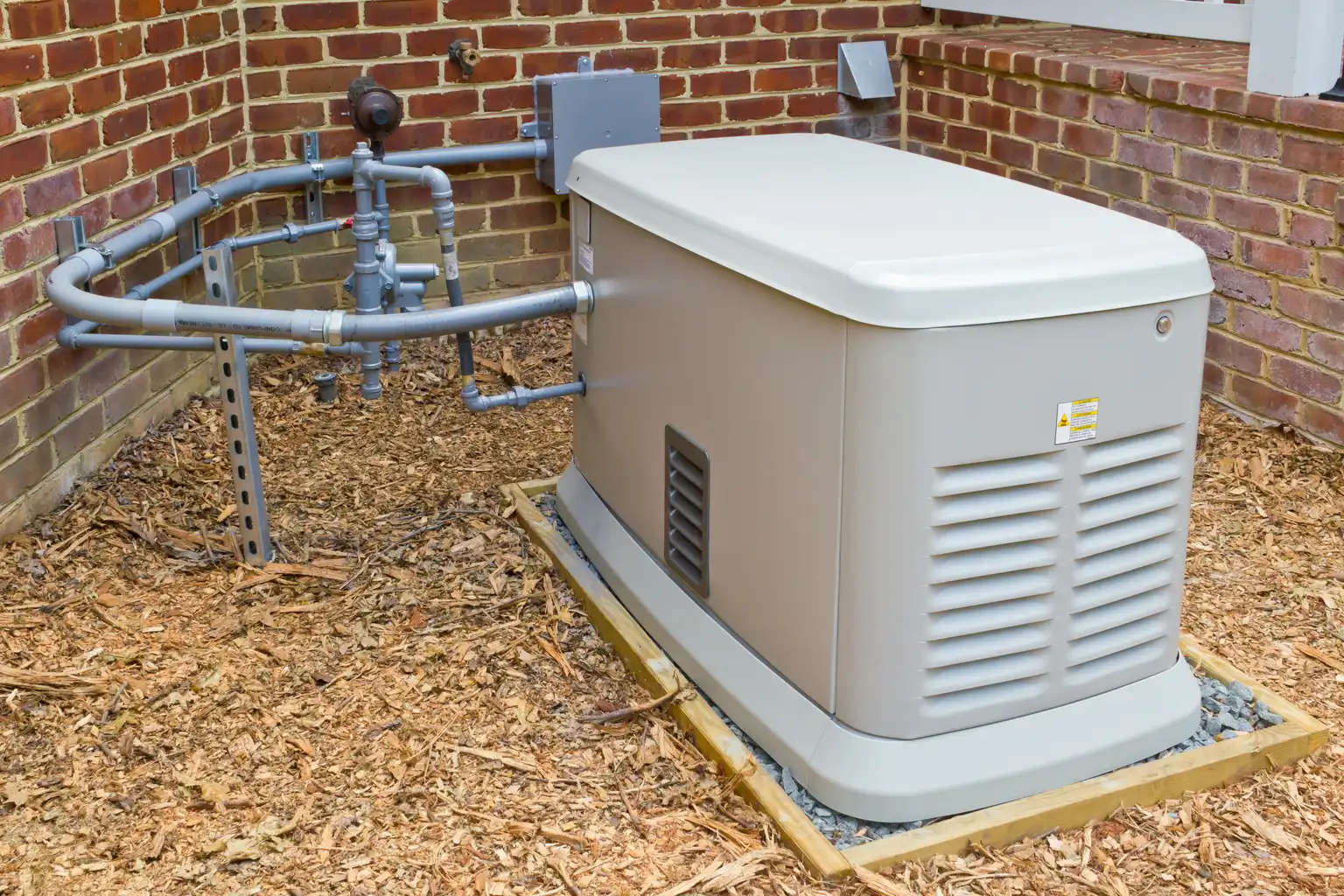
Do I need a whole-house generator in Wayne, NJ?
If your home has a sump pump, the answer is usually yes. Wayne sits along the Passaic River and loses power to storms most years, sometimes for days. A standby generator starts itself within 10 to 30 seconds of an outage and runs on natural gas, so nobody has to be home for it to work.
We install standby generators throughout Wayne and Passaic County. Here’s what actually matters when you’re deciding.
Why do so many Wayne homes lose power?
Wayne sits along the Passaic River, and that geography cuts both ways. It’s part of why the town is beautiful, and it’s why residents here have lived through outages measured in days rather than hours. Floyd in 1999, Irene in 2011, Sandy in 2012, and Ida in 2021 all hit Wayne hard.
Add ordinary summer thunderstorms and winter ice on limbs over overhead lines, and most Wayne households can expect to lose power at least once a year. The question isn’t whether the power goes out. It’s what happens inside your house when it does: sump pump, well pump, refrigerator, freezer, medical equipment, heat, home office.
Portable generator or standby generator: which do I need?
A portable generator costs less up front and runs a few circuits through extension cords or a manual interlock. You have to be home, awake, and willing to go outside during the storm to start it, and you need fuel on hand. It never goes in a garage, a basement, or under an overhang. Carbon monoxide from portable generators kills people every storm season, and exhaust must stay well clear of the house and any window or vent.
A standby generator is permanently installed on a pad outside, runs on natural gas or propane, and starts itself. When utility power drops, an automatic transfer switch senses it and the generator takes over in roughly 10 to 30 seconds, with nobody home required. It shuts down on its own when utility power returns.
For a Wayne home with a sump pump, and most have one, standby is usually the right answer. A flooded basement during a two-day outage costs more than the generator did.
What size generator do I need for my house?
Sizing depends on what you actually want running, not on square footage. The two loads that drive the number are your air conditioning and your well or sump pump, because motors draw a large surge at startup. A house that needs only essentials, meaning fridge, sump, furnace blower, a few circuits and internet, needs far less generator than one that wants central air and an electric range mid-outage.
Broadly, there are three tiers:
- Essential circuits only. Smallest unit, covers sump, fridge, heat and lights.
- Most of the house with one AC zone. Mid-range, and the most common choice in Wayne.
- Whole house, no compromises. Largest unit, and often requires a service upgrade.
We run a load calculation rather than guessing. Be wary of anyone who quotes a generator size over the phone without asking what panel you have or whether you’ve got central air.
Do I need a permit for a generator in Wayne, NJ?
Yes, and it’s worth understanding that a standby generator install involves two separate trades.
The electrical side is our work: the automatic transfer switch, the connection to your service, and any panel work the install requires. We pull the electrical permit and meet the electrical inspector ourselves, as your licensed New Jersey electrical contractor.
The gas line to the unit is plumbing work. It requires its own permit and a licensed plumber, and it is not something an electrician can legally perform. On most installations the two trades coordinate around the same schedule, and we’ll tell you clearly at the proposal stage what sits on our side and what doesn’t.
Both matter for the same reason. An unpermitted generator can create real problems when you sell the house or file an insurance claim.
How long does installation take?
The electrical work is usually one to three days on site. The full timeline from signed proposal to a working generator runs longer, often several weeks, because it includes the load calculation and proposal, township permit approval, coordination with the plumber and the utility if the gas meter needs upsizing, the installation itself, and final inspection.
That lead time is exactly why August is the month to start. Everyone calls the week after a storm, and that’s when both the calendar and the supply chain are at their worst.
Will my electrical panel handle it?
Often yes. Sometimes no, and you want to know that before you buy a generator rather than after.
The transfer switch has to tie into your service. If you’re on an older or undersized panel, or you have a Federal Pacific or Zinsco panel, both still common in Wayne homes and both with documented safety concerns, that gets addressed as part of the job. We assess panel capacity first and tell you honestly whether an upgrade belongs in the scope. Our electrical panel upgrade page covers what that involves.
What maintenance does a standby generator need?
Standby units self-test weekly, so you’ll hear it run for a few minutes on a set day. Beyond that they need annual service: oil and filter, spark plugs, battery check, and a load test. Skipping it is the most common reason a generator fails on the one night it was bought for.
Frequently asked questions
How long until my generator kicks in?
Roughly 10 to 30 seconds after utility power drops. The automatic transfer switch handles it whether you’re home or not.
Do I need a permit for a generator in New Jersey?
Yes. The electrical work requires an electrical permit and inspection, which we pull and handle. The gas line requires a separate permit and a licensed plumber.
Natural gas or propane?
If you have natural gas at the house, that’s almost always better: no tank, no refueling, no running out. Propane is the answer where there’s no gas service.
Can a generator run my central air?
Yes, with correct sizing. AC compressor startup is the single biggest factor in what size unit you need.
How long does the whole process take?
Typically several weeks start to finish, with one to three days of electrical work on site. Permitting and trade coordination drive most of the timeline.
Is a portable generator good enough?
For a few circuits and short outages, sometimes. Not if you have a sump pump and you travel, and never if you’d be tempted to run it anywhere near the house. Carbon monoxide is the real risk.
How often does it need service?
Annually, plus the automatic weekly self-test.
Do you handle the whole installation?
We handle all electrical work, including the transfer switch, the service connection, permits and inspection. The gas line is performed by a licensed plumber, and we coordinate scheduling so the two pieces line up.
Serving Wayne and Passaic County
Luminous Electric LLC is a licensed and insured New Jersey electrical contractor based at 586 Valley Rd in Wayne. We handle generator electrical work throughout Wayne, Pompton Lakes, Little Falls, Totowa, Clifton, Passaic, Paterson, West Milford and Ringwood, plus neighboring Bergen, Essex and Morris counties. 4.9 stars across 122 Google reviews.
Call (973) 832-0680 or request a quote.
Luminous Electric LLC
NJ Lic. #17641 — Licensed Electrical Contractor
Headquarters: 586 Valley Rd, Wayne, NJ 07470 | Phone: (973) 777-9202
Proudly serving homeowners and commercial properties across Passaic, Bergen, Essex, and Morris Counties.